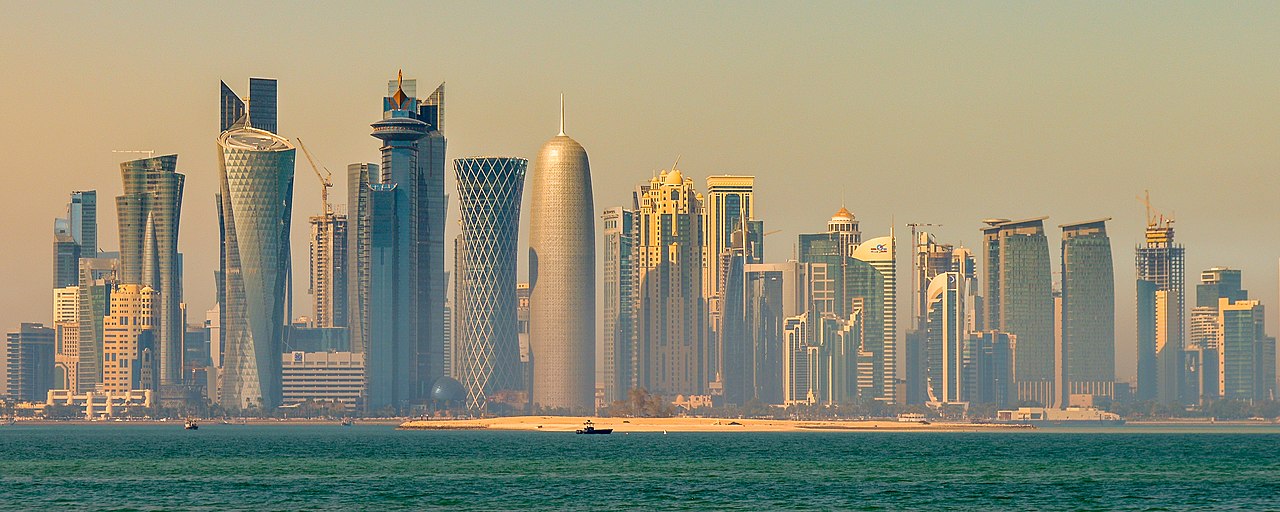
The Qatar position most French firms underestimate.
Coworking in Doha for francophone scale-ups: a market with no advisor
When a French scale-up CFO calls us about GCC expansion, 80% of the time they've already decided on Dubai. Doha barely makes the conversation. That's a structural mistake we've watched cost firms 6-12 months of slower entry into a market the Qatari government is actively recruiting French expertise into. The flex office market in Doha is small — 11 operators we've fully vetted vs 42 in Dubai — but the strategic position for the right firm is genuinely different.
Why Doha gets dismissed too early
Doha gets dismissed for three reasons that aren't always wrong, but are usually misapplied to the wrong firm.
Reason 1: "Smaller market." True — the Qatari domestic market is ~3M people vs UAE's 10M, and the corporate base is more concentrated. But Qatari corporate budgets per project are often larger, and the government deal flow (NDS-3 strategic plan, post-World Cup infrastructure, energy transition) involves contracts where execution capacity matters more than prospect volume.
Reason 2: "More closed culture." True for B2C consumer products, much less true for B2B and government work. Qatar runs on relationships, like everywhere in the GCC, and starting from zero relationships is harder than in Dubai's expat-heavy ecosystem. But once you have a Qatari sponsor or a local partner, the relationship density compounds faster.
Reason 3: "Setup is harder." Partly true — the Qatar Free Zones (QFZ Ras Bufontas + Umm Alhoul) is younger than DMCC, and the mainland LLC route can require a local sponsor (though 100% foreign ownership is now allowed in many sectors post-2019 reform). But it's not 10x harder, it's 1.5x slower at most, and the trade-off for less competition can be worth it.
When Doha actually wins over Dubai
Doha wins for specific firm profiles:
- Energy transition + LNG-adjacent firms. Qatar Energy, QatarEnergy LNG, the upcoming North Field expansion — multi-billion-dollar deal flow, mostly closed to firms without a Doha presence. France has historical relationships (TotalEnergies, Engie, Technip) but new entrants need local presence to compete.
- Sports + entertainment infrastructure. Post-2022 World Cup, Qatar is staging Asian Games 2030 and pursuing Olympic candidacy. Stadium ops, mobility, fan experience tech — active deal flow we've seen in 2025-2026.
- Government tech / digital sovereignty. Qatar's Hassan Stadium 2030 and digital transformation plans involve French tech firms (Thales, Atos legacy) but also new SaaS layers. Ministry of Communications is actively reviewing French alternatives to US/Israeli incumbents.
- Aviation + defense MRO. Qatar Airways Group is the second-largest fleet customer of Airbus globally; Qatar Emiri Air Force a major Dassault Rafale operator. MRO contracts and adjacent services are real.
If your firm is in adtech, e-commerce, traveltech, or B2B SaaS targeting SMEs — Dubai. If you're in any of the above — Doha is at minimum a serious second-base, possibly a primary base.
48h reply
3-4 priced options in Doha, no call required first.
Free for you — operators pay us on signature.
The 11 operators worth knowing
Our active database of vetted Doha flex office operators breaks into three tiers:
Tier 1 — Premium serviced (3 operators): Regus / Spaces (multiple West Bay + Lusail), Servcorp (boutique premium West Bay), and one regional operator with a strong presence in West Bay. Use case: prestige addresses for client meetings, fast-setup for first 12 months.
Tier 2 — Free zone (4 operators including QFZ Business Centre): On-zone flex space inside Ras Bufontas or Umm Alhoul, bundled with QFZ entity setup. Use case: when the free zone path is decided and you want bundled execution.
Tier 3 — Local boutiques (4 operators): Family-run or QFC-affiliated. Lower marketing visibility, often better pricing and personalized service. We map them via direct relationships, not via a public listing.
We don't list operator names publicly because the value is in the matching, not the directory. The shortlist for a specific firm is usually 3-4 from across these tiers.
Realistic budget per desk per month
Mid-2026 mid-range numbers, all-in (rent + services + utilities, excluding parking and 5% VAT):
- West Bay premium serviced: QAR 2,900-5,100/desk/mo
- Lusail or QFZ flex: QAR 1,600-2,600/desk/mo
- Boutique local (West Bay or Msheireb): QAR 1,400-2,000/desk/mo
- Mainland traditional lease (3-6-9 commitment): QAR 1,100-1,800/desk/mo equivalent, but you pay for fit-out, services, utilities separately
Deposit is typically 2-3 months. Free zone setup license adds QAR 20k-59k upfront depending on the zone. Visa quota expansions (above the lease's baseline) cost QAR 7.9k-16k/visa/year.
Doha is not Dubai-light. It's a different position, with different deal flow, different operator dynamics, and different setup tradeoffs. The advisory pool that genuinely knows both markets in French is small. We've built our methodology around that gap — not as a marketing claim, but because the next 5 years of GCC expansion for French scale-ups will be decided by who can navigate Doha as fluidly as Dubai. Most can't yet.
Working on this question?
We audit your case, compare Doha operators with current availabilities, send you 3-4 pre-vetted options with our take. You pick the visits, we book them, we close with the operator. Free for tenants — operators pay us on signature.